Build

AI systems built for daily use.

We build custom artificial intelligence (AI) systems, including agents that complete defined tasks. Each system includes quality tests, safeguards and monitoring. Your team receives the code and instructions to run it.

You have a clear task

You know what the system should do and who will use it. You need software that can handle the task in daily use.

Your prototype needs further work

An early version shows promise. It needs testing and safeguards before customers or staff can rely on it.

You need evidence of reliability

The output affects money, customers or legal obligations. You need to test its quality and monitor its performance.

CUSTOM AI
4 to 12 weeks / agreed project scope

Custom AI systems

We agree test cases and expected results with you before building the system. We use supported technologies that your team can maintain and extend.

We define what the system may do, when it should stop and when a person must review its work.

Before launch, we check the system against the agreed tests and document its limitations.

What we deliver

  • AI system design
  • Search across your documents
  • Automated tests and test cases
  • Code, documentation and setup

Reliability controls

  • Input checks and safeguards
  • Error recovery and retries
  • Action logs and monitoring
  • Cost and response time limits

Example projects

We focus on repeated tasks that can be tested against real examples. People review cases that need judgement.

01

Invoice checks

The system matches invoices to purchase orders and flags differences. Staff review exceptions before approval.

02

Sales email assistant

The assistant uses customer records to draft replies and suggest next steps. It records updates in your sales system.

03

Support assistant

The assistant searches your documents and previous support requests. It cites its sources, drafts replies and refers uncertain cases to a person.

04

Contract review assistant

The system compares contract clauses with your requirements. It flags potential risks for a person to review.

05

Document extraction

The system extracts data from PDFs, scans and forms. It flags uncertain results for review before the data is used.

06

Meeting notes and customer records

The system turns a call transcript into a summary and next steps. It updates the relevant customer record.

Projects take 4 to 12 weeks, depending on scope. We organise the work in four-week cycles, with a prototype in week two of the first cycle.

WEEK 01

Review and specify

We observe your team at work and identify the steps, exceptions and data the system must handle.

By the end of the week, we document the users, process, success measures, possible failures and test cases.

Process review Data review Written specification Initial test cases
WEEK 02

Build and test a prototype

We test a working prototype against the examples agreed in week one. We use sample data, data with sensitive details removed or approved live data.

At the weekly review, we show you the results, errors and proposed improvements.

Working prototype Automated tests Error analysis Weekly review
WEEK 03

Improve reliability

We add input checks, error recovery and human review where needed. Logs and monitoring show what the system does and help identify problems.

We also set up secure sign-in, access permissions, release processes and protection for passwords and access keys.

Safeguards Monitoring Sign-in and permissions Release process
WEEK 04

Launch and hand over

We launch the system on your domain. Your team receives the system design, operating instructions, test results and known limitations.

You can maintain it yourself or retain us for further work.

Live system Operating guide Code and documentation Test results

After launch

Handover

You receive the code, documentation, test cases and operating guide. Your team can run and maintain the system.

Ongoing support

For a monthly fee, we monitor the system, run quality tests and add agreed features. You can cancel each month.

How we build reliable AI systems

01

Test against real examples

We agree expected results before building the system. We test each change against those results.

02

Use supported technologies

We choose established databases, AI services and programming languages that your team can maintain.

03

Keep one team responsible

The same team defines the requirements, builds the system and supports its launch.

04

Include human review

We identify decisions that need a person and provide a way to review, approve or override the system.

05

Explain the system clearly

We provide written requirements, progress notes and operating instructions that your team can use.

06

Give you ownership

You own the code, documentation, operating guide and test cases from the start. The system can run without our ongoing support.

Our technology choices

We choose a small set of supported tools to suit each project. These are examples of the technologies we use.

Models
Claude OpenAI Llama Models for document search Models hosted locally
Agent tools
Anthropic development tools OpenAI development tools Connections to external tools Tool and data connections Task coordination
Search
Postgres with vector search Keyword search Combined search methods Result ranking
Application
TypeScript Python Next.js FastAPI React
Data and monitoring
Postgres Amazon S3 storage BigQuery Sentry OpenTelemetry
Hosting
Amazon Web Services (AWS) Google Cloud Azure Your own infrastructure Cloudflare
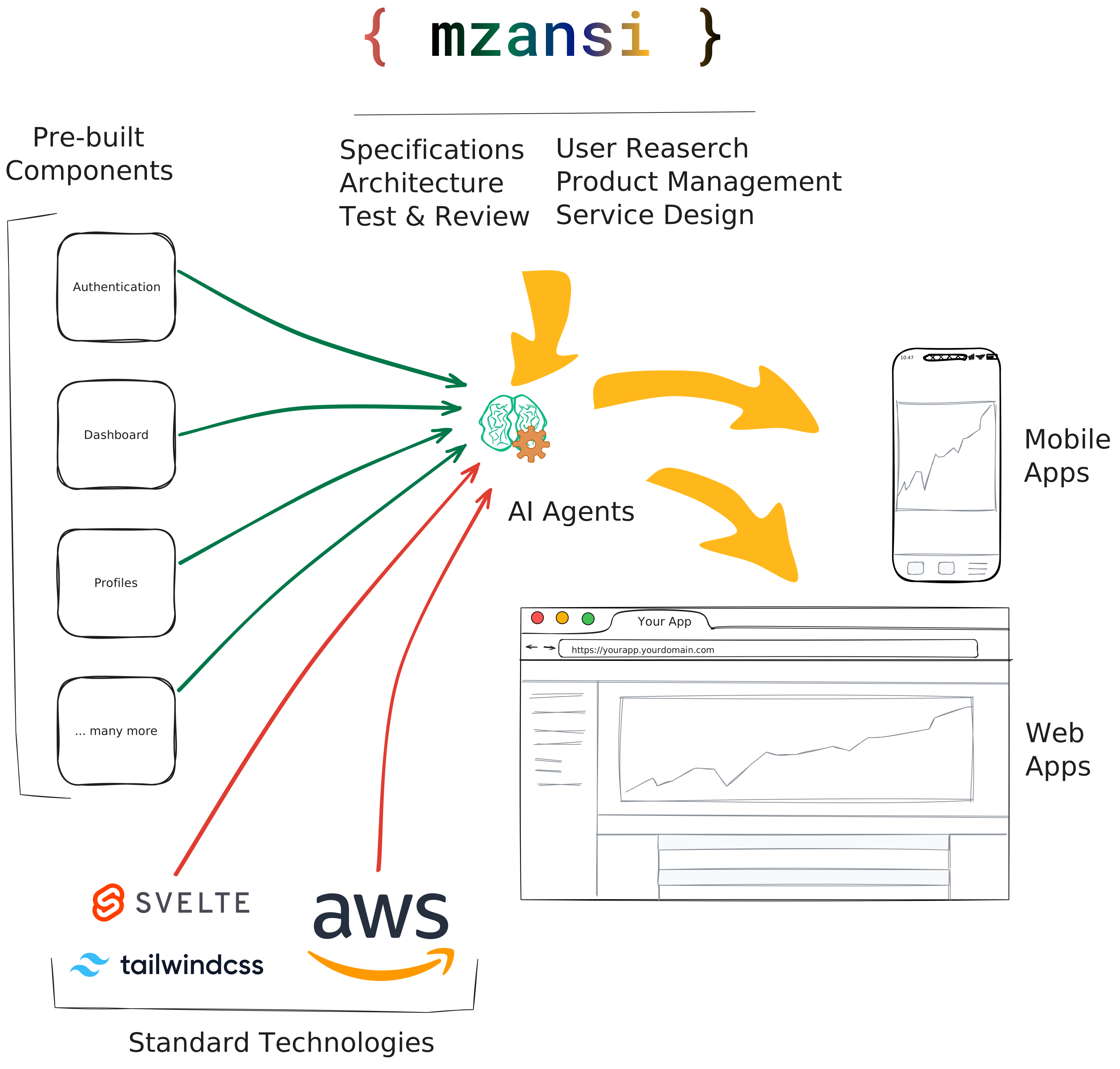
Our team combines planning, research, reusable components and AI agents to build web and mobile apps.

Engineers, user researchers, product managers and service designers work together from the start. We agree requirements, design the system and test it throughout development.

We use established technologies and reusable components. AI agents help with repetitive development tasks.

Your team receives a web or mobile application deployed to your domain.

Common questions

How do you test an AI system?

We agree real examples and expected answers with you. Automated tests compare the system's output with those answers and report its performance.

Which models do you use?

We choose models based on test results and your requirements. These may include Claude, OpenAI models or models hosted on your own infrastructure. We design the system so you can change providers.

How do you handle incorrect AI answers?

We check answers against source documents and define when a person must review them. Tests measure errors, while monitoring helps us detect changes in performance.

Do we get the source code?

Yes. You receive the code, documentation, test cases and operating guide. Your team or another provider can maintain the system.

What if we're not sure it's worth building yet?

Start with Advisory. We assess the likely costs and benefits before recommending development.

Get in touch

We use your details to respond to your enquiry. Read our Privacy Policy for how we handle your information.

Complete the security check above to send your enquiry.

You can also email hello@mzansi.dev.